Police Officer's Badge At A Glance
📅 2026 Update: Changes in Law Enforcement Badge Policies
Since the original article was published, there have been some important updates regarding the issuance of law enforcement badges by the US Department of Justice. Developments include concerns raised by the Office of the Inspector General about the Federal Bureau of Prisons and its practices. The information here highlights these changes and summarizes essential points about law enforcement credentials.
⚠️ Recent Concerns About Badge Issuance
In May 2026, the Office of the Inspector General (OIG) released a report noting issues with the Federal Bureau of Prisons (BOP). The report stated that the BOP issued law enforcement credentials to employees who do not have authorization to carry firearms. This raises questions about the safety and appropriateness of badge distribution practices.
⚖️ Policies and Regulations
Also in May 2026, the OIG pointed out that the BOP's policies may not align with federal regulations. This discrepancy could lead to unauthorized use of badges and credentials, affecting law enforcement integrity. The Department of Justice aims to control and protect these badges to prevent misuse.
📝 Application Process for Volunteers
Individuals looking to volunteer with the BOP must complete an application for volunteer service. They must also pass a background check that includes checks from the National Crime Information Center (NCIC) and fingerprint verification. This helps ensure that volunteers are trustworthy and suitable for service.
⏳ Processing Times
The BOP has set a time frame of 45 workdays to complete background investigations for volunteer applicants. This timeline helps manage expectations for those interested in volunteering and ensures a thorough vetting process.
📌 Key Points Summary
- The OIG raised concerns about badge issuance practices in May 2026.
- BOP policies may not comply with federal regulations.
- Volunteers need to complete an application and background checks.
- Processing for background investigations takes about 45 workdays.
- Unauthorized badge use continues to be a concern.
💡 Tips for Navigating Law Enforcement Badge Procedures
Always review your specific situation with your attorney.
🧐 Understand Eligibility Requirements
To volunteer as a Level I volunteer, individuals typically need to be at least 18 years old. However, at high-security and administrative institutions, the minimum age is 21. Knowing these age requirements is vital for potential volunteers.
🛡️ Complete Necessary Training
Level II volunteers must undergo four hours of program area and orientation training. They also need to complete two hours of annual refresher training each year to maintain their volunteer status.
📋 Stay Informed About Badge Policies
Familiarity with the Department of Justice's guidelines on badge distribution is important. These guidelines outline who can be issued badges and the importance of maintaining control over these credentials.
🔍 Be Aware of Unauthorized Use
The OIG continues to express concerns about unauthorized badge use. Understanding the legal implications of misuse can help volunteers and employees act responsibly.
📞 Reach Out for Assistance
Individuals interested in volunteering can contact the institution's volunteer coordinator for help with the application process. Getting guidance from the coordinator can clarify the requirements and expectations.
❓ Frequently Asked Questions
❓ What are the requirements for becoming a Level II volunteer?
Level II volunteers must be authorized to perform service more than four times a year at an institution or community corrections center. They also need to be at least 18 years old, unless at high-security facilities where the minimum age is 21.
❓ How long does the background check take for volunteers?
The BOP has established a timeframe of 45 workdays to complete background investigations for volunteer applicants. This ensures a thorough check before allowing individuals to participate.
❓ Are there any fees associated with obtaining a law enforcement badge?
There are no specific fees or costs for the issuance of law enforcement badges. These badges remain the property of the United States Government and are protected against unauthorized use.
❓ What training is required for Level II volunteers?
Level II volunteers must complete four hours of program area and orientation training, along with two hours of annual refresher training each subsequent year to maintain their volunteer status.
❓ What should I do if I encounter unauthorized badge use?
If you suspect unauthorized badge use, report it to the appropriate authorities. The OIG and the Department of Justice focus on preventing misuse and protecting the integrity of law enforcement credentials.
❓ Can I volunteer at a high-security institution if I am under 21?
Typically, individuals under 21 cannot volunteer at high-security institutions. They must meet the minimum age requirement of 21 for these specific locations.
⚖️ Recent Cases Related to Law Enforcement Badges
Recent court rulings have focused on the control and use of law enforcement badges, examining cases related to unauthorized distribution and misuse. These rulings tie back to the importance of maintaining integrity in badge issuance and management.
- Court denies petition to block special prosecutor's appointmentSupreme Court of The Commonwealth of The Northern Mariana Islands · December 4, 2015
- Court suspends prosecutor for failing to file appellate briefsSupreme Court of The Commonwealth of The Northern Mariana Islands · December 6, 2007
- Court Dismisses Brennan's Case Against Federal OfficialsDistrict Court, District of Columbia · October 15, 2026
- Court dismisses Crouch's First Amendment case against DOJDistrict Court, District of Columbia · October 12, 2026
You can browse more rulings on the news page to stay updated on recent developments.
End of October 2026 Update
Police Officer's Badge At A Glance
A police officer's badge is one of the most recognizable symbols of law enforcement. It is a symbol of authority and represents the dedication of an officer to serve and protect their community. Here is a quick look at what a police officer's badge represents.
History of the Badge
Police badges have been used since the 19th century and originally served as a way to identify law enforcement officers to citizens. The first badges were made of metal and were often engraved with the name and rank of the officer.
Design
A police officer's badge typically includes the name of the law enforcement agency, the officer's rank, and badge number. Some badges also include a state seal or other emblem representing the local or state police department. The design of the badge varies across agencies, but some common elements, such as a star, eagle, or shield, are often included.
Importance
The police badge represents the authority an officer has been granted by the state to enforce the law and protect citizens. It serves as a visual reminder to citizens that the officer is responsible for their safety and security. The badge also serves as a reminder to the officer of the responsibility and trust placed in them by society.
Engraved Personal Details
In addition to the name of the agency and officer's rank, a police badge often includes the officer's name and badge number. These details are typically engraved on the badge and serve as a unique identifier for the officer.
Badge Ceremony
Many agencies hold a badge ceremony for new officers, where they are presented with their badge in front of family, friends, and fellow officers. The ceremony serves as a formal recognition of the officer's authority and the beginning of their law enforcement career.
Conclusion
In conclusion, a police officer's badge is much more than a piece of metal. It represents the authority and responsibility a law enforcement officer has been given by society to protect and serve their community. Each badge is unique and serves as a reminder to both citizens and officers of the vital role law enforcement plays in society. The badge ceremony is a significant event, marking the beginning of an officer's journey towards serving and protecting their community.
When being confronted by a police officer, an individual can freely ask to see their badge. By law, a police officer should show an individual their badge while the approach them.
As a safety precaution, it is advisable when being confronted by a member of the police to ask to see their badge. If a police officer refuses to show their badge when being asked they could be reported to the department. A refusal of showing a badge can also be a sign that the person may not be an actual police officer.
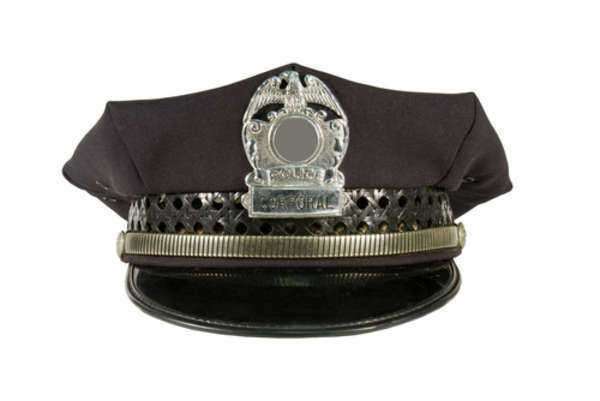
Other rules in which a member of a police department much abide by include: showing their badge, state an individual’s rights at the time of an arrest, and allowing an individual to contact the police department and provide the department with the police officer’s badge number to ensure that they are in fact an actual police officer.